
- HOME
- products & services
- Internet of things
- Industrial IoT
Industrial IoT Solutions
Connect Industrial Assets. Automate Operations. Build a Smarter Enterprise.
OVERVIEW
Intelligent Connectivity for the Modern Industrial Enterprise
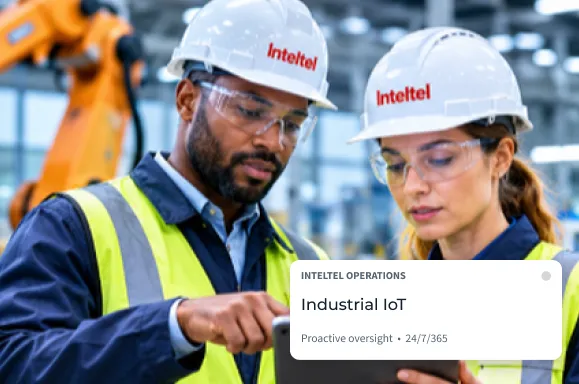
Inteltel helps bridge these environments by integrating industrial assets with secure connectivity, edge processing, enterprise applications, and centralized monitoring. Our approach enables organizations to modernize industrial operations while supporting existing operational technology investments and business continuity requirements.
BENEFITS
Connect Industrial Assets. Automate Operations. Build a Smarter Enterprise.
Inteltel Industrial Internet of Things (IIoT) Solutions help organizations connect industrial equipment, monitor critical assets, integrate operational technology (OT) with enterprise IT, and transform real-time data into actionable intelligence.
Real-Time Industrial Visibility
Monitor equipment condition, operational performance, sensor telemetry, and asset utilization across connected industrial facilities.
Greater Efficiency & Predictive Maintenance
Identify equipment anomalies, improve maintenance planning, reduce avoidable downtime, and support intelligent automation.
Secure & Resilient Industrial Operations
Strengthen industrial connectivity through network segmentation, controlled remote access, monitoring, and security integration.
Why Choose Inteltel?
One Partner for Industrial Connectivity, Security & Managed Operations
Modern enterprises need intelligent, secure, and reliable industrial infrastructure that connects people, machines, sensors, applications, and operational systems across manufacturing facilities, warehouses, utilities, and distributed industrial environments.
Enterprise Networking & Industrial Integration
Inteltel brings together IP networking, SD- WAN, wireless connectivity, cloud networking, and secure industrial gateway integration to support connected operational environments.
Security Integrated into Industrial Connectivity
Our approach incorporates Zero Trust principles, network segmentation, identity- aware access, and industrial security monitoring while respecting operational technology safety and availability requirements.
End-to-End Infrastructure Lifecycle Support
From industrial connectivity assessments and architecture design to deployment, integration, monitoring, and optimization, Inteltel helps organizations coordinate technology modernization across distributed facilities.
What Sets Us Apart?
Connecting Operational Technology with Enterprise Intelligence
Rather than treating industrial sensors and connected machinery as isolated devices, we help organizations integrate OT networks, enterprise IT infrastructure, edge computing, cloud platforms, and security operations.
This coordinated approach supports better visibility, more consistent governance, scalable deployments, and improved collaboration between engineering, operations, and enterprise IT teams.

Smart Manufacturing
Connect production equipment, automate data collection, monitor production conditions, and improve operational coordination.
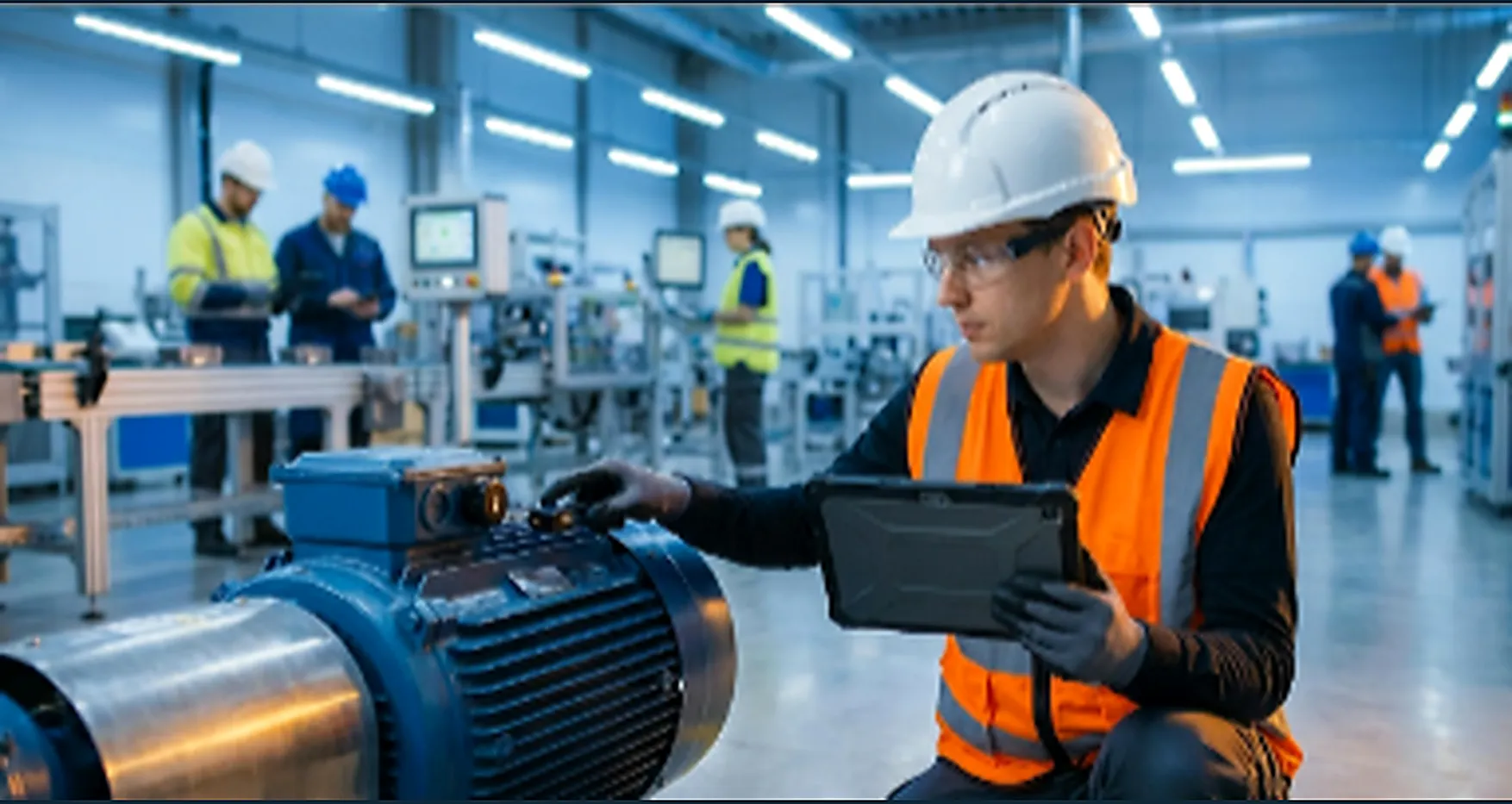
Predictive Equipment Maintenance
Use equipment telemetry and analytics to identify abnormal operating conditions and plan maintenance before failures occur.
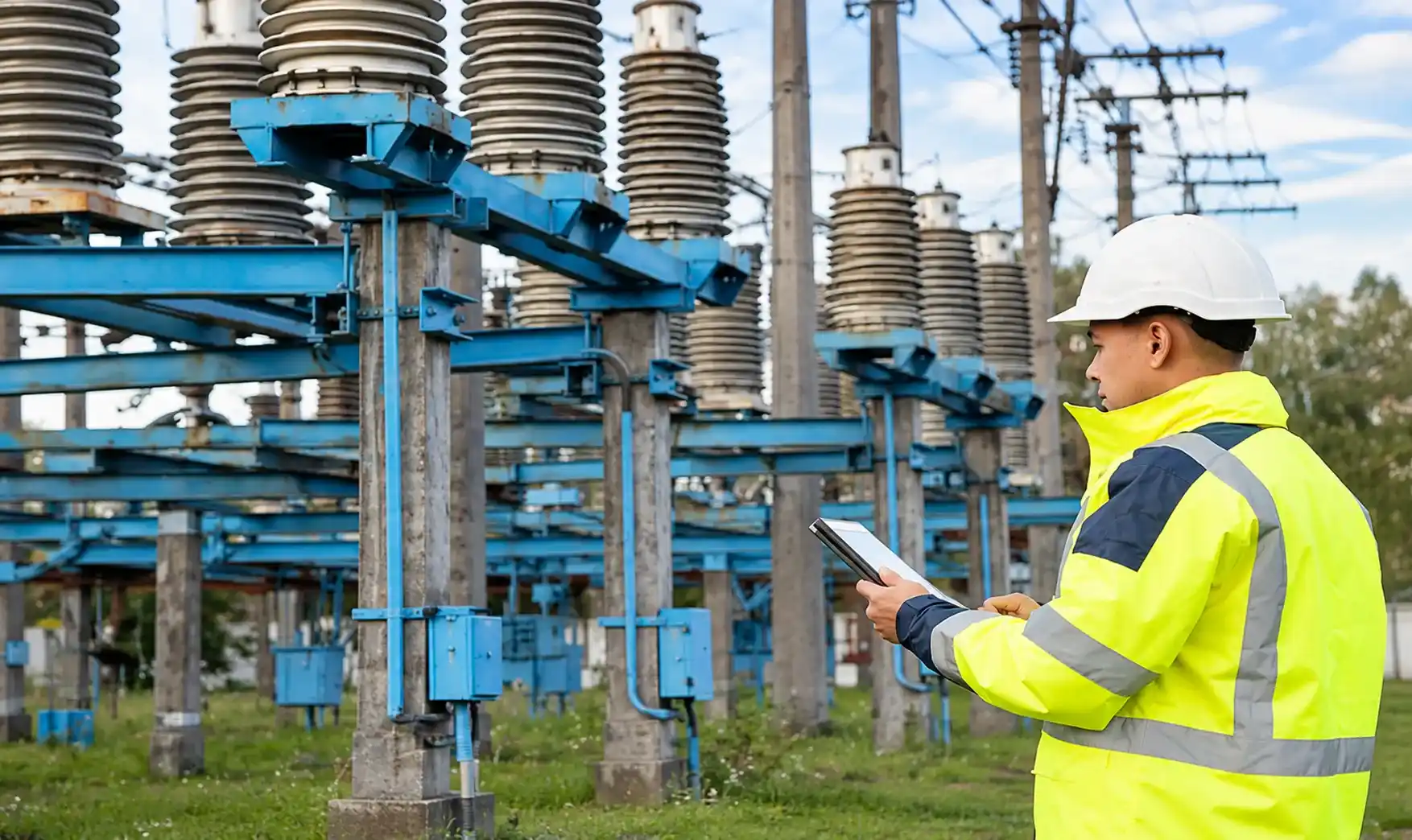
Energy & Utilities
Connect remote infrastructure, smart meters, monitoring equipment, and distributed energy assets.
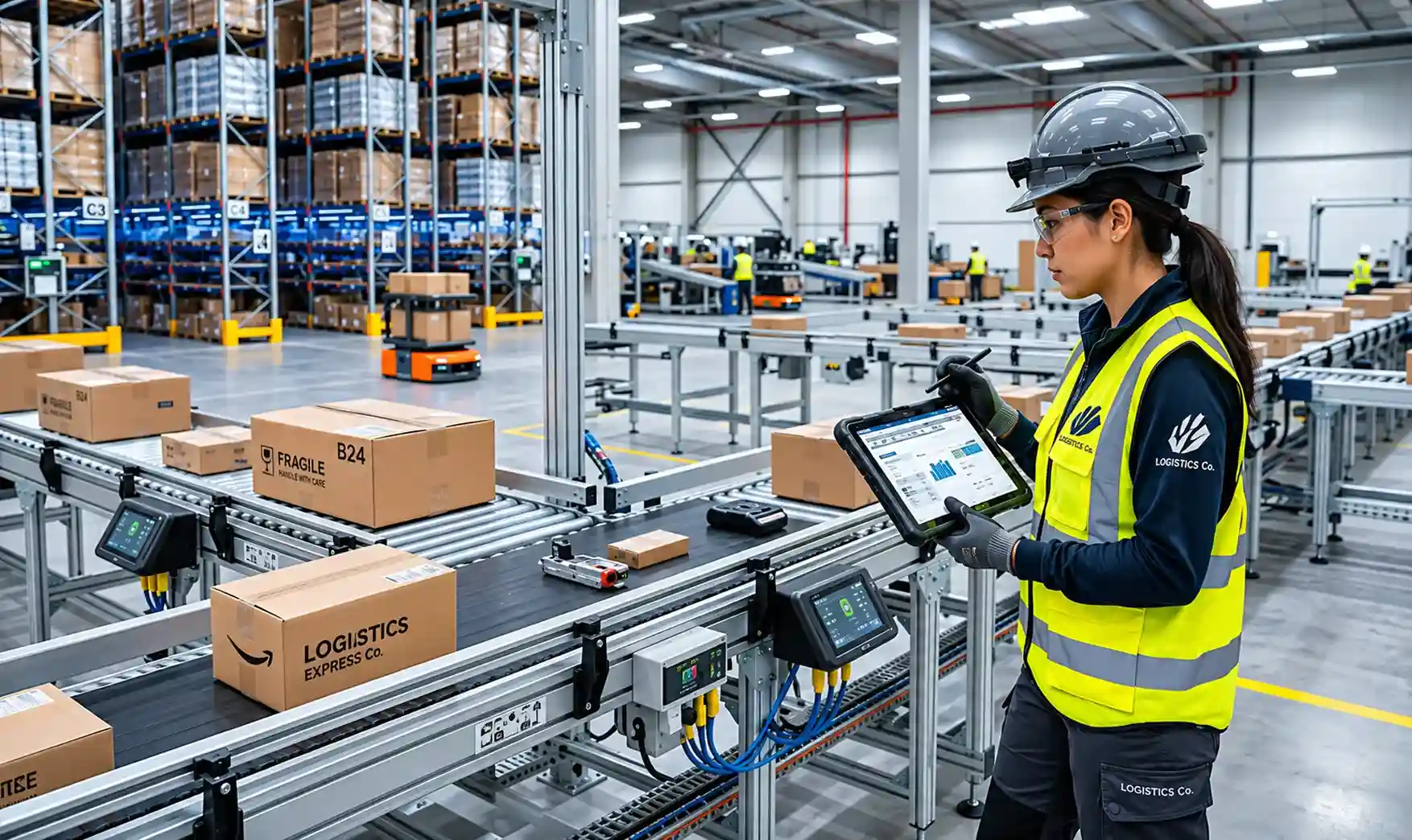
Warehousing & Industrial Logistics
Monitor connected assets, warehouse equipment, environmental conditions, and operational workflows.
Capabilities
Industrial IoT Capabilities
Connected Machines. Intelligent Decisions. Resilient Operations.
By combining industrial connectivity, edge computing, cloud integration, cybersecurity, analytics, and managed network operations, Inteltel helps enterprises improve productivity, reduce operational risk, and prepare for intelligent automation.

Industrial Connectivity
Connect industrial equipment through Ethernet, industrial wireless, private networks, 4G LTE, 5G, and supported industrial gateways.
Edge Computing & Processing
Process operational data closer to industrial equipment to support timely monitoring, analytics, and local applications.
Industrial Asset Monitoring
Collect equipment telemetry, operating conditions, performance information, and maintenance indicators.
Industrial IoT Cybersecurity
Support IT/OT segmentation, secure remote access, device identification, and security monitoring.
Cloud & Enterprise Integration
Connect industrial data with cloud platforms, manufacturing applications, asset management systems, and business intelligence.
AI Analytics & Automation
Apply analytics and supported machine- learning models to identify anomalies, improve maintenance planning, and support operational decisions.
Industrial IoT Architecture
Inteltel Industrial IoT AI Architecture
An Inteltel Industrial IoT AI Architecture bridges operational technology (OT) floors with enterprise IT and hybrid cloud environments (such as AWS), moving from passive monitoring to autonomous, agentic operations.
01
Industrial Assets & Connected Equipment
Sensors
PLCs
Smart Meters
Industrial Gateways
Robotics
Machinery
02
Industrial Network & Secure Connectivity
Industrial Ethernet
Wi-Fi
4G LTE
5G
Private Networks
SD-WAN
03
Inteltel Industrial IoT Intelligence Layer
Edge Computing
Asset Monitoring
Industrial Security
Industrial Analytics
04
Industrial Applications & Cloud Platforms
SCADA
MES
ERP
EAM
Cloud Analytics
AI Applications
05
Inteltel Managed Network & Security Operations
Monitor
Detect
Analyze
Prioritize
Respond
Optimize
Core Architectural Tiers
Edge & Field Device Layer
PLCs, RTUs, industrial sensors, and vision cameras capture real-time telemetry. Local processing handles time-sensitive control loops using pre-validated edge systems and lightweight models.
Edge Gateway & Ingestion Layer
Edge gateways run local inferencing and protocol translation (such as MQTT and Model Context Protocol) to normalize and decode specialized industrial data formats at the edge.
Network & Connectivity Fabric
Dedicated, low-latency pipes like Managed Cloud Connect and Secure Access Service Edge (SASE) bypass the public internet to prevent bandwidth bottlenecks and data exposure.
Agentic AI & Cloud Orchestration Core
Centralized AI agents execute a five-stage model—understanding (data fusion), reasoning (RAG and knowledge graphs), planning (action proposals), acting (autonomous execution), and learning (reinforcement feedback) to self-diagnose and adjust machinery in real time.
Enterprise & Governance Integration
Ties directly into core manufacturing and business systems (MES, ERP, CMMS) backed by Zero Trust security, AI governance, and continuous SOC/SIEM monitoring.
Industrial AI use cases
Use-Case Component Mapping
To build the right Inteltel IoT Industrial AI Architecture, your design choices depend directly on which of the three use cases you prioritize and where you place the compute intelligence.
Predictive Maintenance
Catch failures before they stop the line
Primary machinery & sensors
CNC machines, turbines, motors, pumps
Vibration, acoustic and thermal sensors
Latency requirement
Sub-second to seconds
Recommended compute split
Hybrid
Edge nodes detect local anomalies; cloud agents correlate fleet-wide failure patterns.
Quality Vision Inspection
Reject defects at full line speed
Primary machinery & sensors
High-speed assembly lines, packaging, welding robots
High-FPS optical and IR cameras
Latency requirement
Ultra-low (< 50 ms)
Recommended compute split
Edge-Heavy
Local GPUs run quantized vision models to trigger immediate line rejects.
Energy Optimization
Cut energy cost without cutting output
Primary machinery & sensors
HVAC chillers, compressors, furnaces, microgrids
Smart meters and PLC power tags
Latency requirement
Seconds to minutes
Recommended compute split
Cloud-Orchestrated
Agents balance peak tariff schedules, weather forecasts and production loads.
Vendor-agnostic integration
Multi-Vendor OT Ecosystem Integration Matrix
To support multi-vendor manufacturing floors, the Inteltel IoT Industrial AI Architecture maps directly onto the native protocols, edge runtimes, and AWS cloud services for Siemens, Rockwell/Allen-Bradley, and Schneider Electric ecosystems.
Siemens
TIA Portal / WinCC
Field & PLC Controllers
S7-1500 / S7-1200 PLCs
with SIMATIC MV500 smart cameras or GigE Vision.
Phase 1: Edge Vision & Deterministic Actuation
SIMATIC IPC or Industrial Edge (IE)
runs containerized vision models; triggers rejects via PROFINET IRT or native OPC UA.
Phase 2: Edge Ingestion & Protocol Normalization
SIMATIC IE MQTT Connector or Kepware
normalizes S7 data blocks into MQTT Sparkplug B.
SCADA & Local HMI Feedback
WinCC Unified
displays live vision pass/fail overlays and receives agent-recommended speed setpoints.
Rockwell / Allen-Bradley
Studio 5000 / FactoryTalk
Field & PLC Controllers
ControlLogix / CompactLogix PLCs
with integrated motion and high-speed counters.
Phase 1: Edge Vision & Deterministic Actuation
FactoryTalk Edge Gateway
on ruggedized IPCs; triggers pneumatic diverters via EtherNet/IP (CIP Sync).
Phase 2: Edge Ingestion & Protocol Normalization
FactoryTalk Linx / Optix
converts CIP tags into unified JSON / MQTT Sparkplug B payloads.
SCADA & Local HMI Feedback
FactoryTalk View SE
renders defect heatmaps and requires operator sign-off for agent setpoint writes.
Schneider Electric
EcoStruxure
Field & PLC Controllers
Modicon M580 ePAC / M340 PLCs
paired with Altivar variable speed drives.
Phase 1: Edge Vision & Deterministic Actuation
Harmony IPC
running EcoStruxure Machine Expert; actuates line rejects via Modbus TCP or EtherNet/IP.
Phase 2: Edge Ingestion & Protocol Normalization
EcoStruxure Augmented Operator / OPC UA Server
translates Modbus registers to MQTT Sparkplug B.
SCADA & Local HMI Feedback
AVEVA System Platform / Citect SCADA
visualizes cross-line energy draw and maintenance alerts.
Architecture Patterns by Execution Focus
Edge-Heavy Execution (Best for Vision Inspection & Safety Loops)
- Local Inference Engine: Industrial PCs (IPCs) with dedicated NPUs or GPUs sit directly on the OT network. They run containerized vision or anomaly models locally without waiting for cloud round-trips.
- Deterministic Control: Edge gateways translate AI outputs directly into PLC commands via OPC UA or Modbus to halt lines or actuate diverter gates in milliseconds.
- Bandwidth Filtering: Only flagged defect images, metadata, and model drift telemetry travel across Managed Cloud Connect to the cloud for periodic model retraining.
Cloud-Orchestrated Agent Workflows (Best for Energy & Multi-Asset Maintenance)
- Protocol Normalization: Edge gateways convert raw OT telemetry into unified JSON or MQTT streams and expose them to cloud agents via the Model Context Protocol (MCP).
- Multi-Agent Reasoning: Cloud agents pull live sensor streams alongside historical maintenance logs (RAG) and production schedules to diagnose root causes.
- Closed-Loop Enterprise Action: When an agent detects rising motor heat or an energy spike, it automatically generates a work order in your CMMS, adjusts ERP shift schedules, or dispatches setpoint changes back to the edge.
Edge-Heavy Deployment on High-Speed Bottleneck Machines
Based on your preference to start with edge-heavy deployment on high-speed bottleneck machines to stop immediate downtime and scrap, the optimal starting point is Quality Vision Inspection paired with Edge-Heavy Execution (followed by layering cloud agents for predictive maintenance and energy).

Phase 1
Edge-Heavy Quality Vision Inspection (Data Flow & Protocols)
- Capture (Field Layer — <5 ms): High-FPS GigE Vision or USB3 Vision cameras capture frames of parts moving down the high-speed line. Hardware triggers synchronize image capture with PLC encoder pulses via PROFINET or EtherNet/IP.
- Local Inference (Edge Compute — 10–30 ms): Raw frames stream directly into a ruggedized Industrial PC (IPC) equipped with an edge GPU/NPU. A quantized computer vision model (e.g., TensorRT or ONNX Runtime) inspects for defects without leaving the factory floor.
- Deterministic Actuation (Control Loop — <10 ms): Upon detecting a defect, the IPC sends an immediate reject signal to the machine's PLC over OPC UA (with TSN) or Modbus TCP, triggering a pneumatic diverter gate to clear the scrap.
- Telemetry Filtering (Edge Gateway): Validated pass/fail counts, defect classifications, and cropped images of failed parts are queued locally in a lightweight time-series buffer (e.g., InfluxDB or Redis) to avoid flooding plant bandwidth.
Phase 2
Layering Cloud-Orchestrated Agents (Maintenance & Energy)
- Upstream Ingestion (Hybrid Transit): Edge gateways publish summarized telemetry, vibration/thermal tags, and power meter readings over MQTT with Sparkplug B (using TLS 1.3) across a dedicated Inteltel Managed Cloud Connect circuit to AWS/cloud infrastructure.
- Agentic Context & Reasoning (Cloud Core): Cloud AI agents ingest the MQTT streams alongside Model Context Protocol (MCP) connectors tied to your CMMS, MES, and utility tariff APIs.
- Cross-Line Coordination (Closed-Loop Action): If vision defect rates rise alongside spindle vibration and power draw, the cloud agent diagnoses tool wear, schedules a predictive maintenance window in the CMMS during an off-peak energy period, and pushes updated speed setpoints back down to the line supervisor's HMI.
Connect with Inteltel
Build a Smarter, More Connected Industrial Enterprise
Whether you are modernizing manufacturing facilities, deploying industrial sensors, connecting remote equipment, or implementing intelligent maintenance systems, Inteltel can help develop an Industrial IoT strategy aligned with your operational needs.
READY TO MODERNIZE YOUR NETWORK?